Once upon a time, near George, in the Western Cape, South Africa, there was an area called Hoogekraal, whose leader was the Khoikhoi, Kaptein Dikkop.

What later became George, was a little settlement which had been established in 1777 by the Dutch East India Company, as an outpost for the provision of timber, mainly yellowwood, which grew in the area. In 1811, the settlement was renamed George, for the British King.
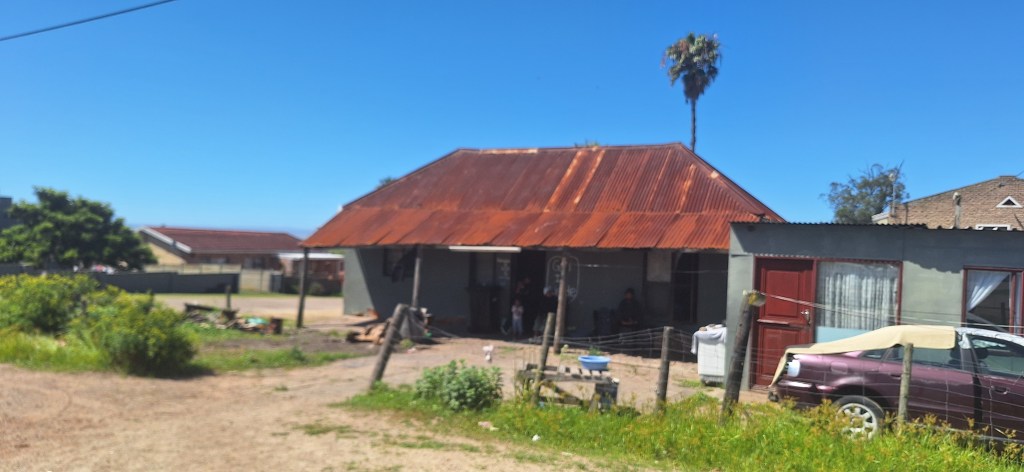
Kaptein Dikkop decided that his people would benefit from a mission station, and in 1813, the London Missionary Society duly sent out Reverend Carl Pacalt, a German speaking Czech. Dikkop died in 1816, having sowed the seeds that would become Pacaltsdorp.

Pacalt, before the church was built, ministered to the Khoikhoi converts under a tree which was called the Tree of Meeting, which still stands today.
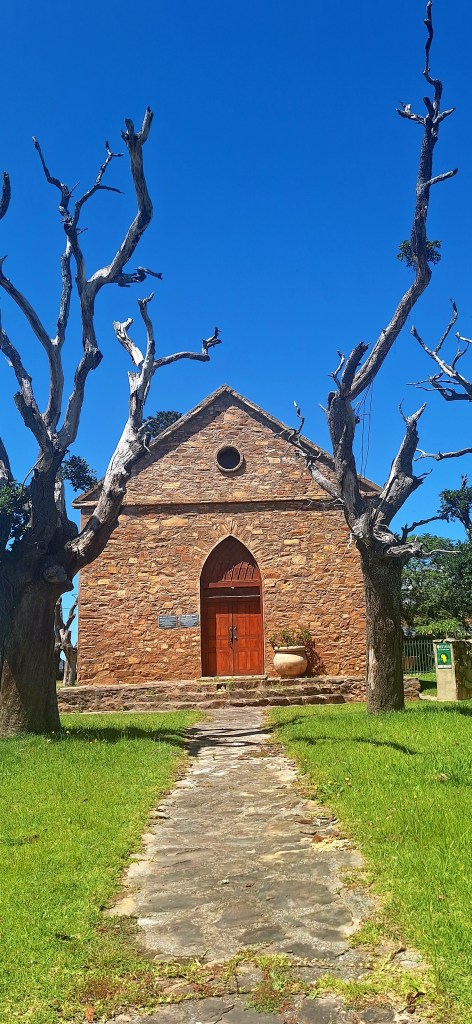
Like all good missionaries of the time, he built a church to minister to the people who lived in the area. This church was built of wood, stone and clay, but it was later replaced by a huge, imposing stone church in the Norman style, which is the only Norman style church in South Africa. It was officially opened in 1825, by Dr John Phillip of the London Missionary Society, complete with a bell imported from England.

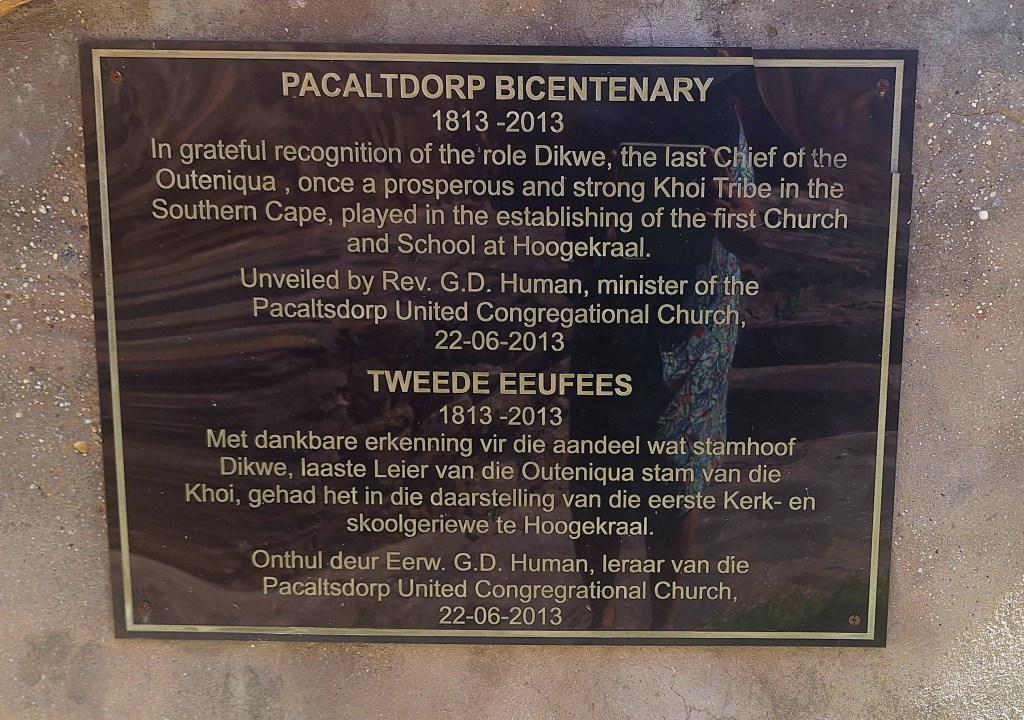
Hoogekraal became Pacaltsdorp, in memory of Carl Pacalt, after his death in 1818.
Kaptein Dikkop had also requested that a teacher was sent to Hoogekraal, to teach his son and other children ‘the same things that were taught to the white people’. His wish was eventually realized when the Rev Anderson joined the mission and built the first school. The Rev Campbell, when revisiting the area, decided that Dikkop’s son, Paul should be educated in England, and took the 11 year old back to England, where he attended Shack(le)well School. Sadly he died aged about 14 from suspected appendicitis.

Kaptein Dikkop having been instrumental in the development of the village, is remembered by the amphitheatre named for him.

Epenita Jantjies, Pacalt’s first convert is remembered by a street named for her.

Carl Pacalt, Epenita Jantjies and members of the Anderson family are buried in a small enclosure next to the church.

Pacaltsdorp became part of George in the 1900s.

 Traveling again? Galavanting with Kathryn Costello