
Agate Terrace is part of Port St Johns’ northern beach, Long Beach, on the eastern side of the Umzimvubu River, Wild Coast, Transkei, Eastern Cape, South Africa. Why the name? What is hidden under the sands of this beach?
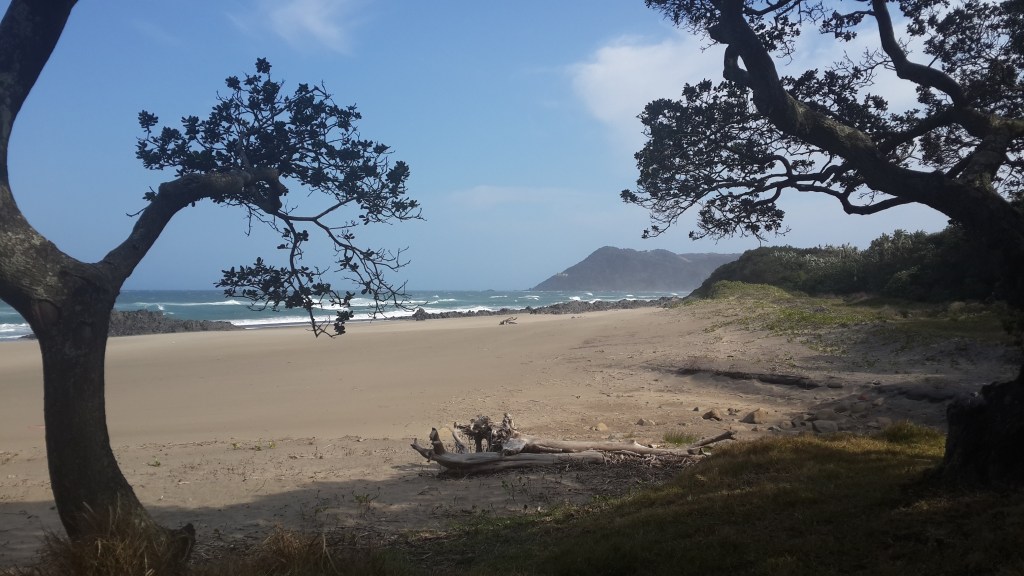
Agate is pronounced in the common English manner, as in the pretty striped stone which sometimes gets used for jewelry. It is not pronounced with an African inflection: A-gar- ti, as many visitors do, much to the amusement of locals. Naturally, the locals have no clue where Agarti is, which frustrates the visitors.
For the best part of the 1900s, carnelian beads would occasionally be found on this beach. These pretty red and russet beads were mis-named agate beads. Agate is a similar banded pretty stone, but it is more common than carnelian. Note: cornelian is an alternative spelling, used more commonly in Britain.


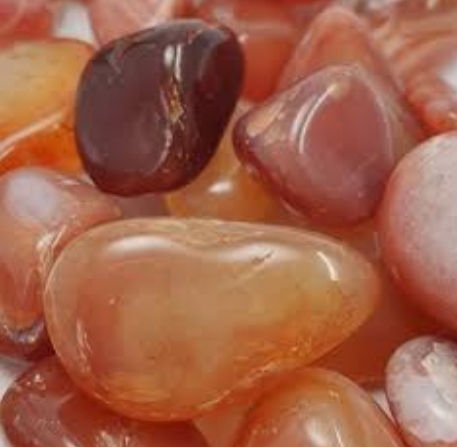
Left: an ancient necklace of carnelian and agate beads. Centre: Carnelian beads. Right: Red agate.
Carnelian beads date back 5000 years and have been used by Indians, Ancient Greeks, Romans, Egyptians, Bulgars and others. They were carried back from India by Portuguese ships, both for sale at home, and to be used to trade with in West Africa.

Potuguese trade routes
How did they get on to a remote Wild Coast Beach? There are other beaches where carnelian beads have been found; Bead Beach at Morgan Bay probably being the most well known. Those beads are known to have come from the San Espirito which was wrecked there in 1608. The beads found near Plettenberg Bay come from the Sao Goncalo wrecked there in 1630. Likewise, the beads found at Msikaba north of Port St Johns came from the Sao Bento wrecked there 1554. All the above areas also produced shards of Ming china.

There is no record of a wreck at Agate Terrace. The closest mishap was at the Umzimvubu River Mouth, where the Nossa Senhorita de Belem ran into trouble in 1635. She couldn’t be repaired and the crew and passengers camped out in what is now Port St Johns, and built themselves new ships. Just about everything was salvaged from the floundered ship.


Left: A Portuguese Caravel. Right: The Umzimvubu River at Port St Johns
Agate Terrace is about 4km away from the river mouth, how did carnelian beads get there? No Ming pottery fragments have been found in this area either. Did they fall from a survivor’s pocket? Or is there an unaccounted for wreck under the dunes?
References:
British Museum of History
Gillian Vernon: Even the Cows were Amazed.

 Traveling again? Galavanting with Kathryn Costello
Hallo Kathryn,
We were in Morgan Bay in 2022,but couldn`t access bead beach,because
the recent rains.
Though the staff at the hotel was very helpful,and through some of the
informal traders trading in the parking area I was able to buy a couple of beads
Just before our trip I read “The Sunburnt Queen” which of course triggered my interest.Do you know if there are still beads for sale at Port St John`s?
Then I`m deperately trying to get a copy of Even the cows were amazed,it seems
to be sold out wherever I enquire
I really enjoyed your write-up about the carnelian
Please keep it up
LikeLiked by 1 person
Hello!
Sorry, I seem to have overlooked your mail.
Thank-you for reading my blog.
Beads: the only ones I have ever seen were in private collections. I think you’d be very lucky to find any, but there must be some hiding somewhere!
Even the Cows were amazed: I dabble in rare and out of print books through my ‘online’ bookstore – really just an FB page: books Books Books SA, and Transkei books are my favourite. I can probably find you a copy, but hey are scarce. The last one I sourced for a (very happy) customer, I sold at R1800.00.
If you’d like me to try find one, please either WhatsApp me on 066 416 8760, or mail me at booksbooksbookssa@gmail.com
Best regards
Kathryn
LikeLike
These bbeads can also be found on Munster, Kzn. Munster is just north of Port Edward.
LikeLike